Why Melbourne Homes Have an Acoustic Problem
Modern Melbourne homes — particularly newer builds in growth corridors like Melton, Werribee, Point Cook and Tarneit — are designed with open-plan living at the core. Large, connected spaces with high ceilings, polished timber floors, minimal soft furnishings, and expansive glass windows are aesthetically striking, but they're acoustically terrible.
Every hard surface reflects sound. In an open-plan home, sound bounces between the floor, ceiling, windows and walls repeatedly before reaching your ears — arriving delayed and from multiple directions. The result is a persistent "wash" of noise that makes conversation exhausting, TV audio hard to follow, and the whole space feel chaotic when more than two people are in it.
Acoustic wall panels solve this by converting sound energy into heat as it passes through their fibres, reducing the amount of reflected sound in the room. The difference after installation is not subtle.
What Makes a Good Acoustic Wall Panel
Not all acoustic panels are created equal. The key performance metric is the NRC (Noise Reduction Coefficient) — a number between 0 and 1 that tells you what percentage of incident sound the panel absorbs. An NRC of 0.95 means 95% absorption; an NRC of 0.30 means 30%.
For meaningful acoustic improvement in a residential or commercial space, you want a panel with an NRC of at least 0.75. Our PET fibre acoustic panels carry an NRC rating of up to 0.95 — among the highest available in the Australian market.
Beyond performance, consider:
- Material safety — the panel should not off-gas volatile organic compounds (VOCs). PET fibre panels made from recycled plastic bottles are safe, stable and non-toxic.
- Durability — in Melbourne's climate, humidity resistance matters. PET fibre handles moisture fluctuations far better than foam-based alternatives.
- Aesthetics — the panel should look intentional, not remedial. Modern PET panels are available in 40+ colours and can be used as a genuine design feature.
- Thickness — thicker panels (25mm or more) absorb a wider range of frequencies, including lower mid-range sounds. Thinner decorative foam panels primarily absorb high frequencies only.
PET Fibre vs Foam vs Fibreglass — Which Is Right for Melbourne?
PET Fibre Acoustic Panels
The best all-round choice for Australian residential and commercial use. Made from 100% recycled PET fibre, these panels are durable, safe, moisture-resistant and genuinely attractive. They work across a broad frequency range, are available in a wide colour range, and can be installed permanently or on a Z-clip system for renters. This is what Smart Surface Solutions supplies and installs in Melbourne homes.
Acoustic Foam
Foam panels (the classic wedge or pyramid tiles you see in budget studios) are very effective at absorbing high frequencies but struggle with mid and low-range sounds. They're also not ideal for living spaces — the appearance is functional rather than decorative, they can yellow over time with UV exposure, and cheap foam variants off-gas chemicals. Fine for a recording studio; not ideal for a family home.
Fibreglass and Mineral Wool
High-performance materials used in professional studio builds. Excellent acoustic properties, but they require a fabric wrap to look presentable, can irritate skin during installation, and are overkill for most residential applications. PET fibre delivers comparable results in real-world environments without the complexity.
Melbourne tip: If your space has polished concrete or timber floors, treating 25–35% of your wall and ceiling surface area with acoustic panels will make a dramatic, noticeable difference. Start with the walls at ear height — particularly the two side walls at the midpoint of the room.
The Best Spaces for Acoustic Wall Panels in Melbourne
Home Theatres and Media Rooms
The highest-impact application. A dedicated home theatre without acoustic treatment will never sound as good as it should, regardless of the quality of your audio equipment. Panels on the side walls at the primary reflection points, on the rear wall, and on the ceiling above the main listening position dramatically improve dialogue clarity, bass response and soundstage. This is the application where the difference before and after is most dramatic.
Open-Plan Living Areas
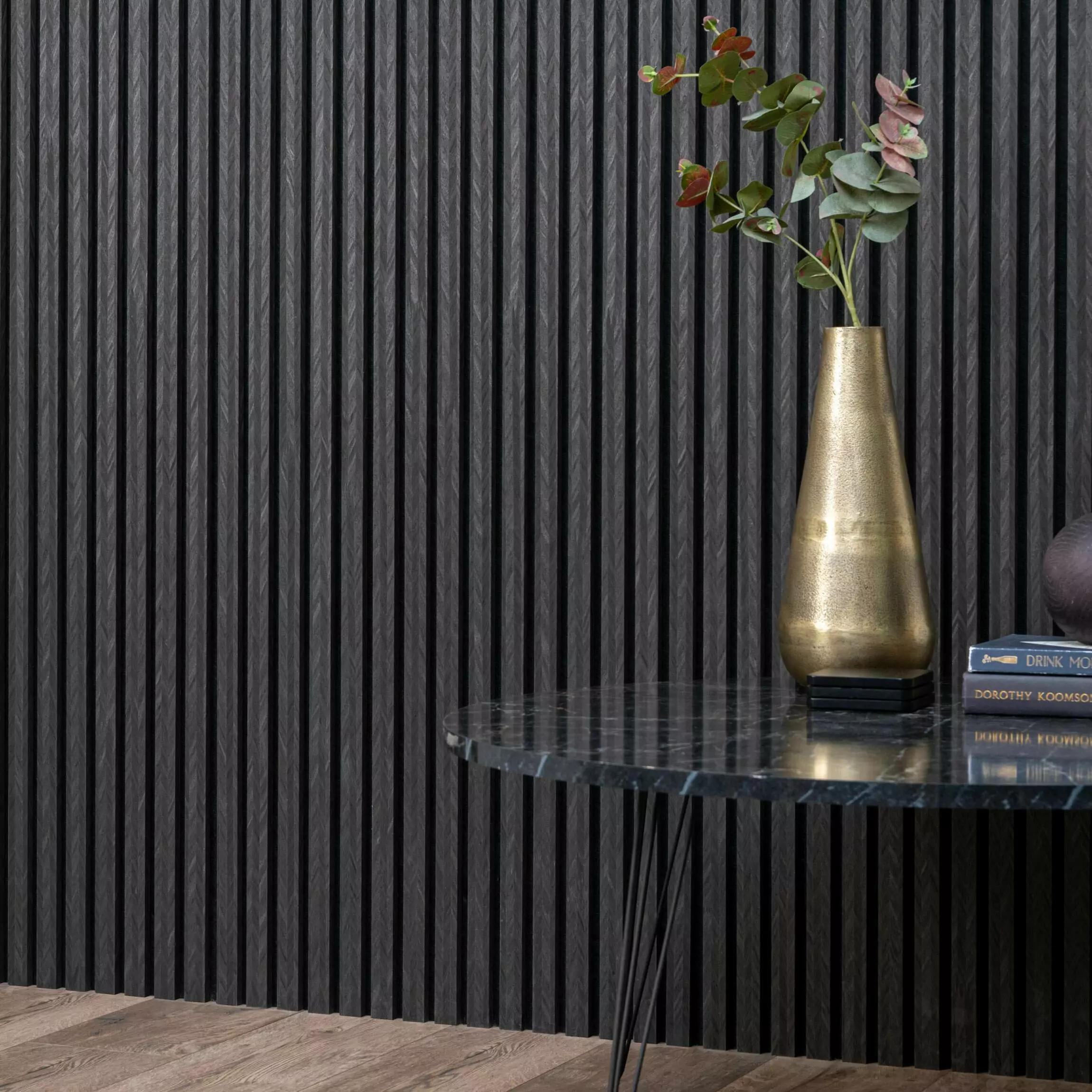
A feature wall of acoustic panels in a living, dining or kitchen space solves the noise buildup problem while also adding a striking design element. Because PET panels come in 40+ colours, they can complement any palette — from charcoal and black for a modern aesthetic to warm sand and terracotta tones for a natural interior.
Home Offices
Since remote work became standard, home office acoustics have become a genuine priority. Panels behind and around your desk reduce the room echo that makes you sound unprofessional on video calls, and lower the ambient noise floor so concentration is easier over long working sessions.
Restaurants, Cafes and Commercial Fit-outs
High ceilings and hard surfaces make most Melbourne cafes and restaurants uncomfortably loud. Strategic placement of acoustic panels — often integrated into a feature wall design — is now standard in hospitality fit-outs throughout Melbourne's inner and outer suburbs.
How Many Panels Do You Need?
As a practical starting point: treating 20–30% of your room's total wall and ceiling surface area will deliver a substantial improvement in most standard residential spaces. For a dedicated home theatre or recording environment, aim for 40–50% coverage.
Calculate your room's wall area (perimeter × height), subtract windows and doors, and work out 25% of that figure. That gives you a good starting coverage target. Our team can help you map specific reflection points in your space for a more precise result — just reach out.
Buying Acoustic Wall Panels in Melbourne
Smart Surface Solutions supplies and installs PET acoustic panels across Melbourne, with our showroom located in Melton VIC. We carry panels in 40+ colours, standard sizes and custom formats. Whether you need a single feature wall for your living room or a full acoustic treatment for a commercial fit-out, we can help with both supply-only and full supply-and-install options.
We service suburbs across Melbourne's western corridor — Melton, Caroline Springs, Hoppers Crossing, Werribee, Tarneit, Point Cook, Rockbank and surrounding areas — as well as metro Melbourne and regional Victoria.