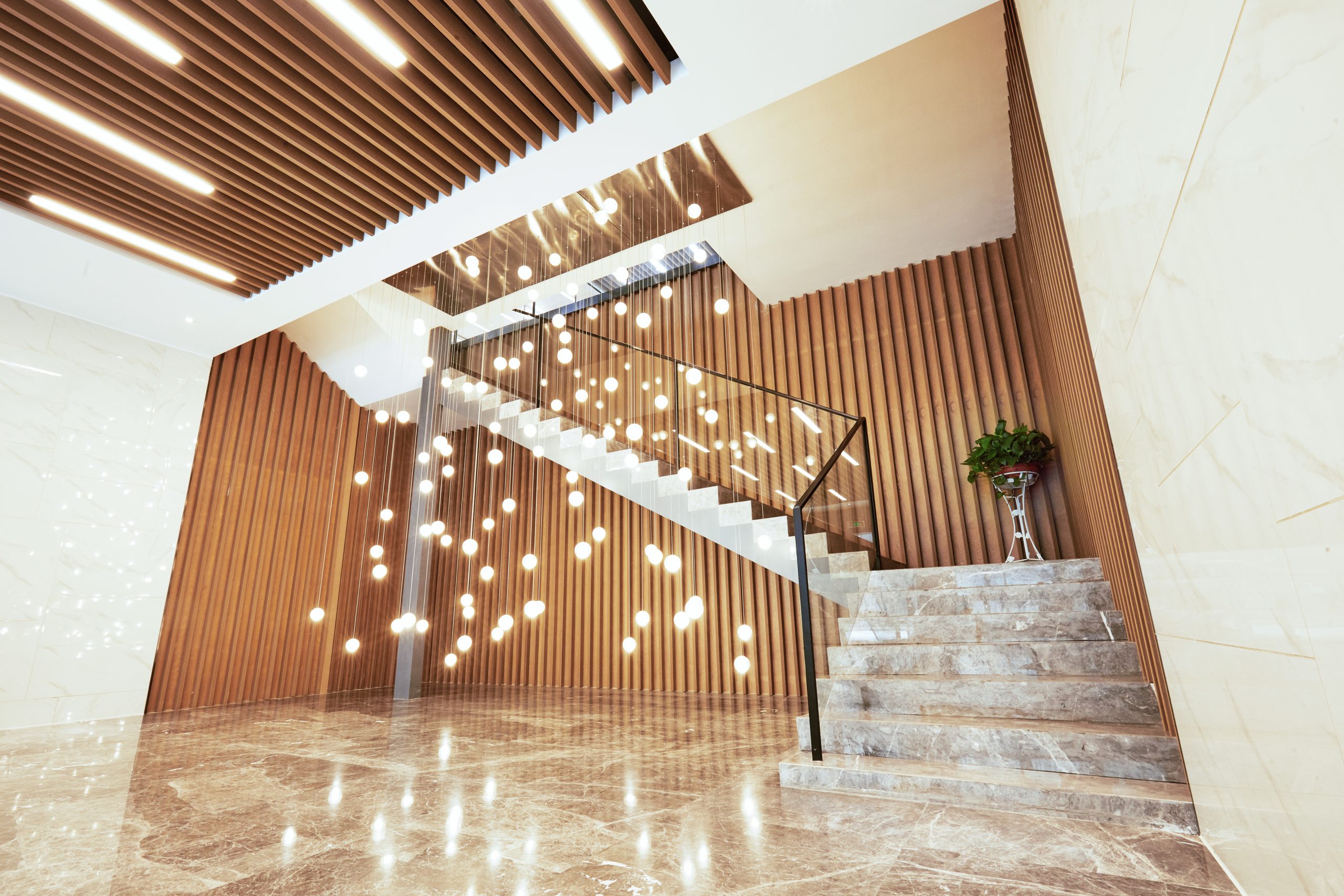
What Is WPC and Why Is It So Popular?
Wood Plastic Composite (WPC) is an engineered material combining wood fibre with recycled plastic. The result is a panel that looks and feels like real timber — with the warmth, texture, and visual depth that natural wood delivers — but without any of its practical drawbacks.
In Australia, where humidity levels vary dramatically between regions and bathrooms are often under-ventilated, traditional timber cladding presents real challenges. Warping, swelling, mould, and termite damage are common complaints. WPC panels eliminate all of these issues entirely while delivering the same aesthetic appeal.
Where Can You Use WPC Feature Walls?
One of the biggest advantages of WPC panels is their versatility. They are suitable for:
- Living room feature walls — the most popular application; creates a dramatic focal point behind a TV, fireplace, or sofa
- Bathroom and ensuite walls — fully waterproof, ideal for replacing tiled feature walls
- Kitchen splashbacks and accent walls — heat resistant and easy to wipe clean
- Bedroom headboard walls — adds warmth and texture behind beds without heavy framing
- Commercial fit-outs — reception areas, restaurants, retail spaces, and office interiors
Pro tip: WPC panels work especially well as a full-height feature wall. At 3000mm length, each panel runs floor-to-ceiling in most Australian homes with no horizontal seams — giving a seamless, architectural finish.
Planning Your WPC Feature Wall
Measure Carefully
Start by measuring the width and height of your wall. WPC panels are typically 300mm wide and 3000mm tall. Divide your wall width by 300mm to calculate the number of panels needed, and always add 10% for waste and cuts.
Choose the Right Finish
Our WPC range comes in a variety of wood-grain textures — from light, Scandinavian oak tones through to rich dark walnut and espresso finishes, plus neutral greys and contemporary matte blacks. The right choice depends on your interior palette, lighting, and whether you want the wall to recede into the background or become a statement piece.
As a general rule: lighter finishes open up smaller rooms, while darker tones create drama and sophistication in larger spaces with good natural light.
Prepare Your Wall Surface
WPC panels can be installed over most prepared surfaces — plasterboard, existing tiles (if level), and cement sheet. The surface should be clean, dry, and flat. Any significant unevenness greater than 3mm should be filled and sanded before installation begins.
Installation Overview
WPC panels use an interlocking click system that makes installation straightforward for confident DIYers. The general process is:
- Mark a level vertical guide line on your wall
- Apply construction adhesive to the back of the first panel
- Press firmly and check for plumb
- Click the next panel into the groove of the previous one
- Continue across the wall, cutting the final panel to width with a circular saw
- Finish with matching trim strips at edges and corners
Important: Leave a 5mm expansion gap at floor and ceiling. WPC panels expand slightly with temperature changes, and this gap ensures the wall remains flat over time.
Maintenance: What to Expect
One of the most compelling benefits of WPC is how little maintenance it requires. Unlike real timber, you won't need to sand, oil, stain, or seal your panels — ever. Regular maintenance amounts to:
- Wipe down with a damp cloth to remove dust or marks
- Mild soapy water for kitchen or bathroom cleaning
- Avoid harsh abrasive cleaners that could dull the surface finish
Is WPC Right for Your Project?
WPC panels are the right choice if you want the aesthetic of timber with zero long-term maintenance, are installing in a wet or humid area, need a cost-effective alternative to real wood cladding, or want a DIY-friendly product you can install in a weekend.
If you're unsure, visit our Melton showroom to see the panels in person and speak with our team about your specific project. We stock a range of finishes and can help you pick the one that best suits your interior.